Gym Flooring for | Your Home

Join hundreds of homeowners who have converted their dusty dumping ground of a garage into a professionally installed value-added garage gym.

Create a quieter, cleaner training space at home with rubber flooring that protects your floors, improves stability, and makes your gym feel properly finished.
Training at home is convenient, consistent, and often the easiest way to stay on track — but the right flooring is what turns a spare room, extension, or home gym corner into a space that feels safe, stable and enjoyable to use. Rubber gym flooring helps protect your subfloor from impact, reduces noise and vibration, and gives you a grippy surface that feels secure under heavy kit and fast-paced sessions.
Why home gym flooring is worth it
  • Protects your floors from dropped dumbbells, kettlebells and equipment feet
  • Reduces noise and vibration through the house (especially useful upstairs or in terraced homes)
  • Improves grip and stability for lifting, conditioning and general training
  • Makes the space feel more “gym-like” and easier to keep clean
  • Helps define a dedicated training zone so your home setup stays organised
Key considerations (home-specific)
Ceiling height (don’t get caught out) Home gyms don’t always have loads of head height, especially in loft rooms, converted spaces, or older houses. Remember that gym flooring adds height to the floor and can reduce your usable ceiling height by around 2–3cm (depending on thickness). Before buying tall kit like racks, pull-up rigs, cable machines or ski ergs, measure your floor-to-ceiling height and account for the flooring thickness so everything fits comfortably and safely.
What’s underneath (wood, laminate, tiles, carpet, concrete) Home gyms can sit on all sorts of subfloors. The key is choosing flooring that protects what’s underneath and feels stable.
  • On wood/laminate/tiles: prioritise protection and stability to avoid dents, cracks, and movement
  • On carpet: it can feel soft and unstable under racks/benches; many people prefer to remove carpet or create a firmer base underneath their training zone
  • On concrete: you’ve got a solid base, but you’ll still benefit from comfort, noise reduction and protection
Underfloor heating If your home gym has underfloor heating, our tiles are compatible. Just keep in mind that rubber flooring acts as an insulator, so you will typically get reduced heat coming through compared to a bare floor. If underfloor heating performance is important to you, it’s worth considering your thickness choice and how warm you need the space to feel in winter.
Noise & vibration (big one in homes) If you’re training early, have kids asleep, or share walls with neighbours, noise matters. Rubber flooring helps reduce vibration and “clatter”, and in general:
  • More thickness = better noise reduction and comfort
  • A stable layout and good coverage (including walkways) reduces movement and rattling
  • If you do heavy barbell work, consider a dedicated lifting area within your layout
Level surface (avoid rocking equipment) In a home, small uneven spots can make benches, racks or cardio equipment rock. Check for uneven floorboards, thresholds, or tile lips. If the floor feels uneven, choosing at least 20mm is a sensible minimum for a more forgiving, stable feel. If it’s noticeably uneven, it’s worth levelling the area first for the best result.
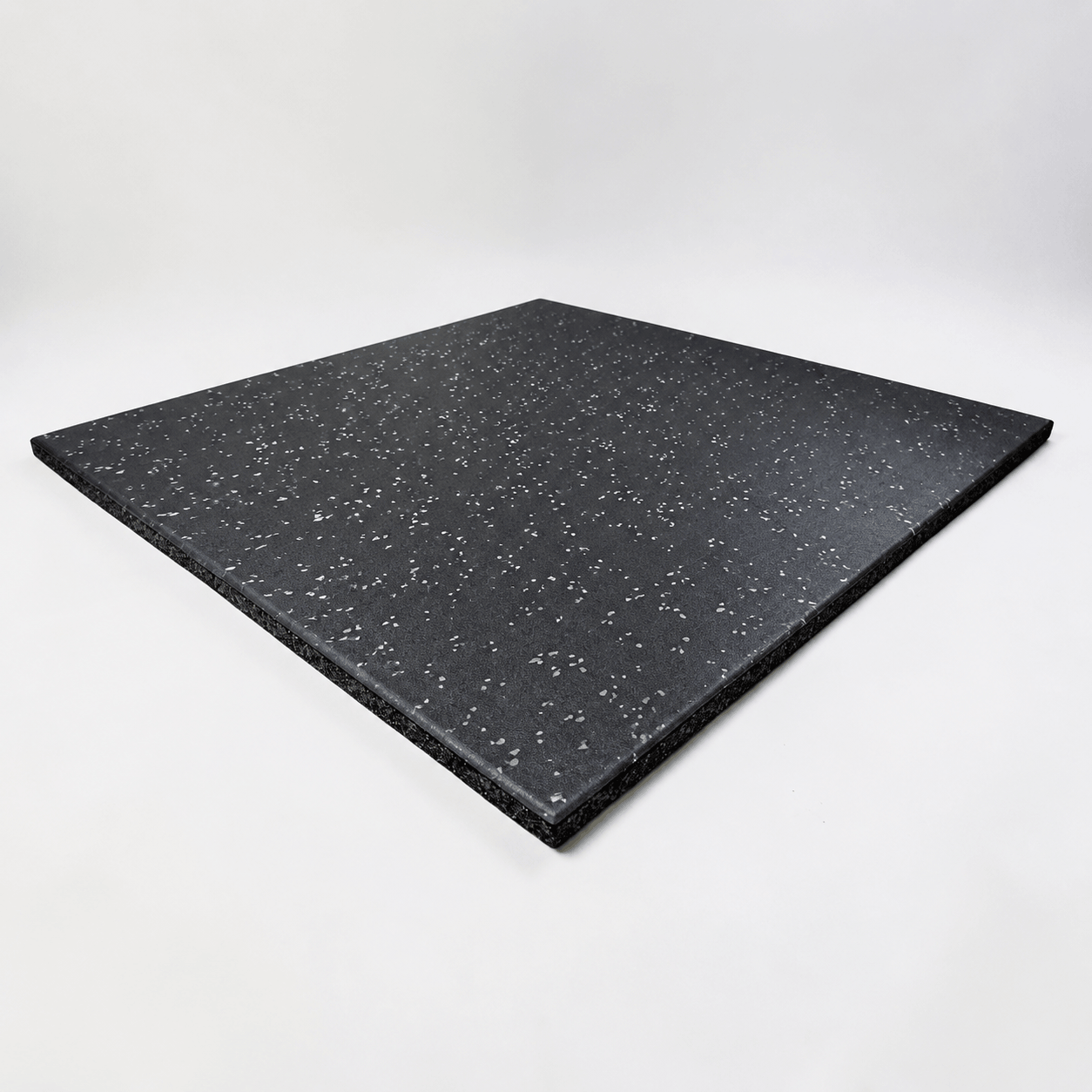
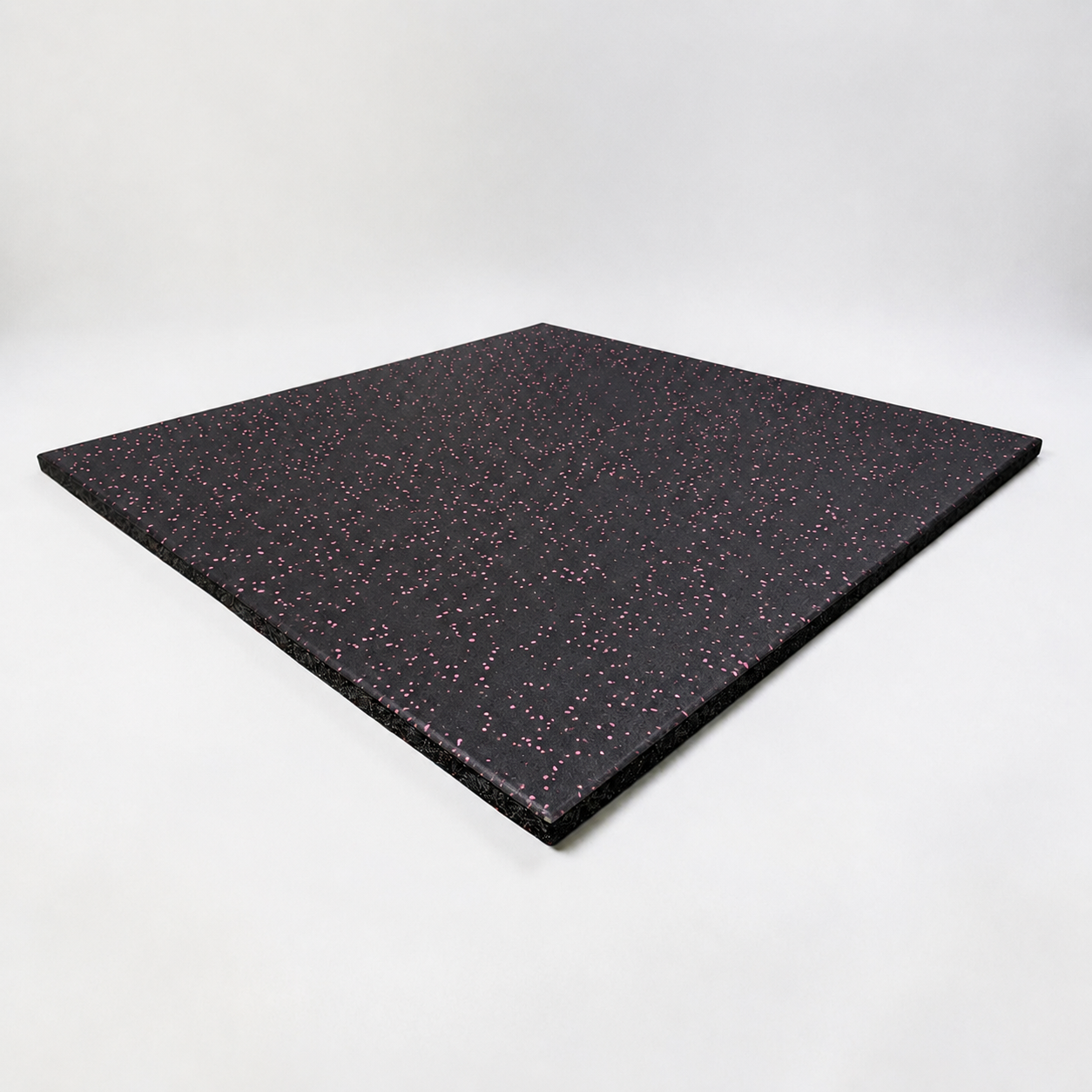
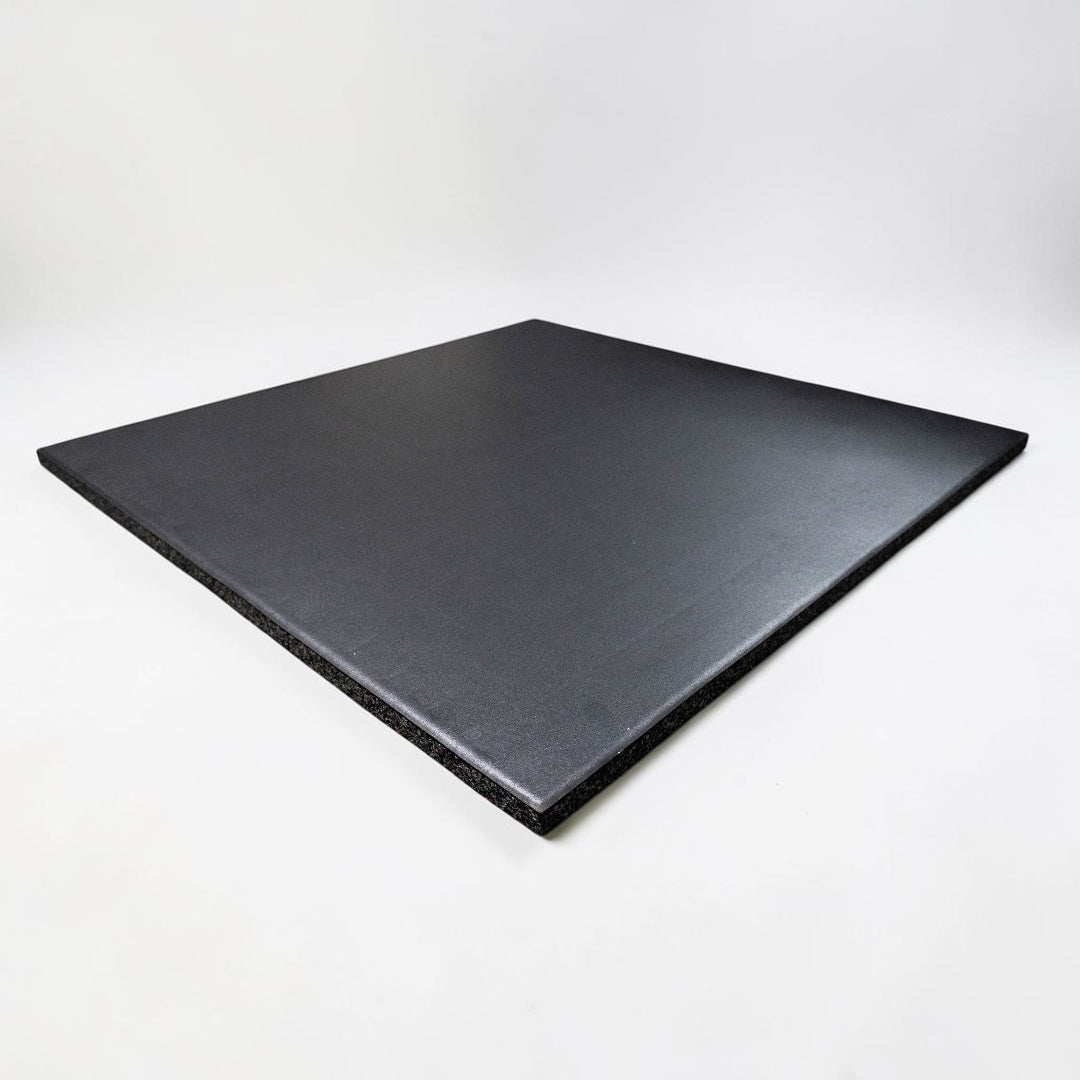
Choosing your range (why Luxe/Designer often suit homes) If you’ve invested in a gym space inside the house (not just the garage), it’s usually worth spending a bit more on a finish that looks sharper and is easier to live with day-to-day.
  • Classic: best value and straightforward performance if budget is the priority
  • Luxe: premium finish that’s easier to clean and maintain — ideal for finished rooms and indoor spaces
  • Designer: unique, high-end visual effects for spaces where aesthetics matter as much as performance
Coverage (plan for how you actually train) Measure the space you’ll really use: rack footprint, dumbbell area, cardio zone, and walkways. Many home gyms don’t need wall-to-wall coverage — but they do benefit from covering the full training zone so you’re not constantly stepping on/off the flooring mid-session.
Next step
Use the calculator below to work out your area, then choose the range that fits your home gym and the finish you want. If you’re unsure, send us your room measurements, ceiling height and kit list and we’ll point you to the best option.

Flooring Calculator

Enter your room dimensions to calculate how many square meters of flooring you need.

Recommended Flooring

Reviewed by +100 Happy Customers

Why people choose Garage Gym Flooring over other Brands

See why hundreds of people are now using Garage Gym Flooring for all their gym flooring needs.

Out and out gym floor experts
Honest Transparent Pricing
Legitimate 5 star rating
Top Commercial Quality Gym Tiles
Excellent Value on Full Range
Garage Gym Flooring
Glasgow-based market leaders
UK Leading General Flooring Brand
UK Leading Gym Equipment Brand
Swipe to scroll

Frequently Asked Questions

Got questions? We’ve got answers!

What’s the difference between Classic, Luxe and Designer?

Classic is our best-value range. Luxe is a premium range with a finish that’s easier to maintain. Designer series is for unique, high-end visual effects and standout spaces.

What warranty do you offer?

We offer a 3-year warranty. With normal use, we guarantee that after 3 years your flooring will still be doing its job: protecting your floor and your weights.

How quickly do you dispatch and deliver?

We dispatch within 1 working day. Delivery is typically 2–4 days. We’ll give you a heads-up and call to check a delivery time that works for you.

What thickness do I need?

It depends on how you train and what equipment you’re using. 20mm is our most popular seller. Heavier lifting and higher impact generally benefit from thicker flooring for better protection and noise reduction. If you’re unsure, use the calculator and share your kit list and we’ll recommend the best fit.

How do I choose the right flooring for my space?

Start with how you train (lifting vs general fitness), how “finished” you want the space to look, and how easy you want it to be to maintain. Use the calculator to confirm your area, then choose the range that fits your budget and the finish you want.

How do I measure my space?

Measure the length and width of the area you want to cover (in metres), then use the calculator to work out total m². Include walkways and the footprint of any equipment you’ll keep in place. Or use our calculator tool.

Can I install gym flooring myself?

Yes, most customers install it themselves. The key is a clean, dry, reasonably level base and taking time to plan your layout before you start. We are also happy to install.

Is gym flooring easy to clean and maintain?

Yes. Regular sweeping/vacuuming keeps dust and grit down, and an occasional mop with a mild cleaner is usually all you need. If easy day-to-day upkeep is a priority, Luxe is the best choice.

Real Results Our Customers See In Just 6 hours

We can totally transform your gym within a day, enabling you focus on training and building a strong, healthy physique.

Image banner
Image banner
Before 1 day later
Image banner
Image banner
Before After 2 Weeks